Delray Beach Water Sports and Boating: A Local Guide
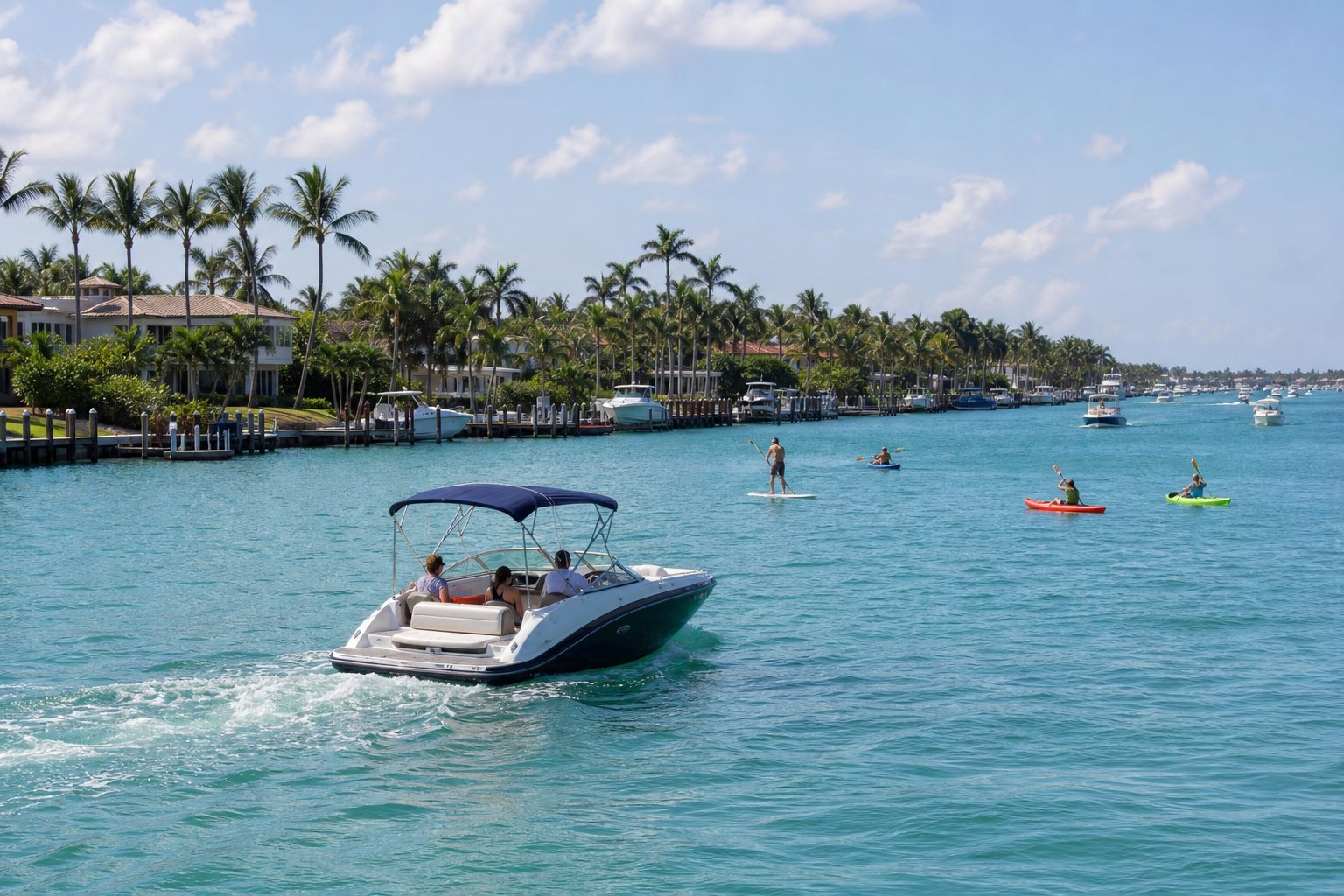
Water sports in Delray Beach come down to two settings: the calm Intracoastal Waterway, where paddleboarding, kayaking, small-boat cruising and inshore fishing happen, and the open Atlantic off the public beach, where people swim. Public boat ramps at Mangrove Park and Knowles Park give trailered boats access to the Intracoastal, and visitors without a boat can rent or join a tour. This guide covers each option, plus the license, life jacket and speed-zone rules that apply on the water.
The Intracoastal Waterway
The Intracoastal Waterway is the calm channel that runs north to south just behind the beach, separating the barrier strip from the mainland. It is the backbone of boating in Delray, a protected stretch of water that is far gentler than the open ocean and lined with homes, docks, and waterfront parks. Atlantic Avenue crosses it on a drawbridge near the east end of downtown, and the water here is busy with everything from kayaks to cabin cruisers. For most people, the Intracoastal is where a day on the water begins. A few things worth knowing:
- The water is generally calm and sheltered, which suits paddlers and small boats far better than the ocean.
- The Atlantic Avenue (SR 806) drawbridge opens on a schedule for taller vessels. Palm Beach County's drawbridge table lists it as opening on the quarter and three-quarter hour, so boaters plan around 15 and 45 minutes past the hour. Confirm the current schedule before relying on it.
- Waterfront parks along the channel give you a place to launch, watch boats, or simply sit by the water.
- Manatees move through these waters at times, and posted slow zones protect them, so watch your speed and your wake.
Paddleboarding and Kayaking in Delray Beach
For getting on the water under your own power, kayaking and stand-up paddleboarding are among the most rewarding ways to explore. The sheltered Intracoastal and the smaller waterways that branch off it are ideal for paddling, offering calm conditions and close-up views of shoreline, birds, and the occasional manatee. Paddling lets you reach quiet corners that boats cannot, and it is a low-cost, low-barrier way to spend a morning.
Florida treats kayaks, canoes and paddleboards as vessels, except when a paddleboard is used in a swimming, surfing or bathing area. According to the Florida Fish and Wildlife Conservation Commission (FWC), a human-powered vessel needs:
- One U.S. Coast Guard-approved wearable life jacket per person aboard. Children under 6 must wear one, and everyone else is strongly advised to.
- A bell, horn or whistle that can be heard for at least half a nautical mile.
- A white lantern or flashlight if you are out between sunset and sunrise or in poor visibility.
Beyond the rules, a few habits make paddling easier:
- Early morning typically brings the calmest water and the lightest wind.
- Sun protection matters, since you are exposed the entire time you are on the water.
- Stay clear of marked channels where motorboats travel, and keep your distance from any wildlife you encounter.
- Bring water and let someone know your route if you are heading out on your own.
For a wider look at beach days and shoreline parks, see the guide to Delray Beach beaches and parks.
Delray Beach Fishing
Fishing is woven into life on this coast, and Delray offers several ways to wet a line. The Intracoastal and its inlets hold inshore species, the surf along the public beach is open to anglers within posted areas, and offshore the Atlantic opens up to deeper-water fishing for those who head out by boat. Depending on how you like to fish, you might cast from shore, drop a line from a small boat in the Intracoastal, or join a trip that runs out into the ocean.
Do you need a fishing license in Florida?
Usually yes. Per the FWC, Florida residents who fish only from land or a structure attached to land need the free shoreline license, or a regular saltwater license, which costs $17 for residents. The shoreline license does not cover fishing from a boat or from an island you reached by boat. Nonresidents cannot use it and buy a 3-day, 7-day or annual saltwater license at $17, $30 or $47 (prices as listed by the FWC in November 2026, plus handling fees). Anglers on a licensed pier, children under 16 and residents 65 or older are exempt. Local seasons, size limits and bag limits vary by species, so check the FWC rules before a trip.
Boat Rentals and Tours
You do not need to own a boat to enjoy the water here. The area around Delray supports a range of ways to get out on a vessel without the commitment of ownership:
- Rentals that let experienced boaters take out a small craft for a few hours on the Intracoastal.
- Guided tours and cruises that handle the navigation while you take in the scenery.
- Paddleboard and kayak rentals for those who want to explore under their own power.
- Charter trips for fishing, where a captain and crew run the boat and know where the fish are.
For visitors especially, a rental or a tour is the easiest way to experience the waterway without the logistics of bringing or owning a boat. Prices, hours and operators change often, and many listings online are booking-marketplace pages, so confirm details with the operator and ask whether the rental includes life jackets. If you are planning a longer trip, the guide to outdoor activities in Delray Beach and the roundup of things to do in Delray Beach show how a day on the water fits with the rest of the area.
Boat Ramps, Marinas and Launching
For those who bring their own boat, the area provides places to launch and dock. FWC's public access listings name two ramps on the Intracoastal in Delray Beach: Mangrove Park, at 102 SE 4th Avenue, and Knowles Park, at 715 SE 10th Street, which lists parking and restrooms. Both listings say that rules and hours change and leave fees, lanes and hours blank, so check with the city before you tow a trailer there.
Marinas along the waterway offer slips, fuel, and services. On busy weekends and through the winter season, ramps and parking can fill early, so an early start is wise.
Speed zones and manatees
If you are new to the area's waters, learn the local channels, the bridge schedules, and the slow-speed zones before heading out. Florida's rule for Palm Beach County boating restricted areas (Florida Administrative Code 68D-24.017) includes a slow speed, minimum wake zone shoreline to shoreline around the East Atlantic Avenue (SR 806) bridge. Posted signs on the water always control, so slow down wherever you see them.
Safety and Seasonal Notes
South Florida weather shapes any day on the water. The summer months bring afternoon thunderstorms that can build quickly, while the winter season offers calmer, drier conditions that many boaters prefer. A few habits keep a day on the water safe and enjoyable:
- Check the marine forecast before heading out, and watch the sky for building storms in summer.
- Carry the required safety gear, including life jackets for everyone aboard.
- Respect slow zones and keep your distance from manatees and other wildlife.
- Stay hydrated and protected from the sun, which is strong on the water year round.
With the calm Intracoastal on one side and the open Atlantic on the other, Delray Beach is a genuine water town, and there is an option to suit nearly every level of experience.
Frequently Asked Questions
Where can I launch a boat in Delray Beach?
The two public Intracoastal ramps in FWC's listings are Mangrove Park (102 SE 4th Avenue) and Knowles Park (715 SE 10th Street). Fees, lanes and hours are not listed there, so confirm them with the city before you go.
Do I need a license to fish from the beach in Delray Beach?
Florida residents fishing only from land need the free shoreline license or a regular saltwater license, unless exempt. Nonresidents need a paid saltwater license. Children under 16 and residents 65 or older are exempt, according to the FWC.
Can I paddleboard on the Intracoastal in Delray Beach?
Yes, the sheltered Intracoastal is the usual place to paddle. Carry a life jacket for each person, a whistle or horn, and a light if you are out after sunset, and stay out of the marked channel where motorboats travel.
Do kids have to wear life jackets on a kayak or boat in Florida?
Children under 6 must wear a Coast Guard-approved life jacket on a human-powered vessel, per the FWC. Everyone else must have a wearable one aboard, and the FWC strongly advises wearing it.
When does the Atlantic Avenue bridge open for boats?
Palm Beach County lists the Atlantic Avenue (SR 806) bridge as opening on the quarter and three-quarter hour. Check the current schedule and any posted notices before planning a trip with a tall vessel.