Tennis in Delray Beach: Courts, the Open, and How to Play

Most beach cities Delray Beach's size have a few public courts and call it a day. Delray has something different - a city-owned tennis complex anchored by an 8,200-seat stadium, a clay court network spread across two publicly managed sites totaling 38 courts, and an ATP 250 professional tournament that draws more than 60,000 spectators every February and broadcasts to audiences in more than 50 countries. That combination - world-class professional tennis, a serious public facility, and free casual courts in city parks - makes tennis part of Delray's identity in a way that goes well beyond recreation. Understanding the full picture means looking at all of it together, because the tournament and the public courts are not separate stories. They share the same ground.
The Delray Beach Tennis Center: Flagship Public Facility
The Delray Beach Tennis Center opened in 1974 on West Atlantic Avenue. The city owns and operates it, which means anyone can walk in and play - no club membership, no private affiliation required. That public-access reality is easy to miss when you first see the facility, because it does not look like a municipal amenity. It looks like a serious tennis destination, because it is one.
The on-site stadium, built in 1992, seats 8,200 spectators. During the ATP tournament each February that structure fills with fans watching world-ranked professionals. Every other month of the year the same venue is open for daily public play. The court inventory gives players genuine options:
- 14 clay courts
- 4 hard courts
- 8 pickleball courts
That mix matters. Clay slows the ball and is gentler on joints - most serious recreational players prefer it for longer sessions. The hard courts suit players who want a faster surface or who are sharpening their game before competition. The pickleball courts reflect fast-growing demand for that game across South Florida, and folding them into the same footprint as a professional tennis venue is a practical decision that keeps the facility relevant to a wider range of players.
The pro shop handles everything a working tennis facility needs: racquet stringing, merchandise, and locker rooms for players who want to change or shower after a match. On-site stringing matters more than it sounds - if you arrive with a broken string or want a retension before you play, you do not have to leave the property.

Getting On a Court: Fees, Booking, and Open Play
The Tennis Center charges court fees for play. Check the facility's official page or contact the center directly for current rates, since fees are revised periodically and the posted rate is always more reliable than anything printed elsewhere. Reservations can be made in advance, and the center accommodates walk-up play when courts are available, though availability varies by day and time.
Weekday mornings tend to be the lowest-traffic window at the center. South Florida's snowbird season runs roughly from November through April, which coincides with the region's cooler weather and draws the largest recreational player turnout. If you want a court without a wait, a weekday mid-morning slot outside of peak season is your best option.
The two weeks surrounding the ATP tournament in mid-February are the exception to all normal patterns. Court availability at the Tennis Center tightens significantly as the facility shifts into event mode. Visitors who want both to watch the tournament and to play should plan their on-court time for the days immediately before or after the main draw, not during it.
What to Bring and What to Expect
The Tennis Center is an active working facility, not a resort amenity. Courts are well maintained but this is public tennis - expect players across a range of skill levels, occasional waits during busy windows, and a straightforward facility atmosphere rather than a private club. That is part of what makes it accessible.
Clay courts require non-marking shoes. Regular sneakers or hard-court shoes with aggressive tread can damage the clay surface, and staff may ask you to change footwear before play. If you are unsure whether your shoes are appropriate, ask at the pro shop when you arrive.
The Delray Swim & Tennis Club: The Second City Site
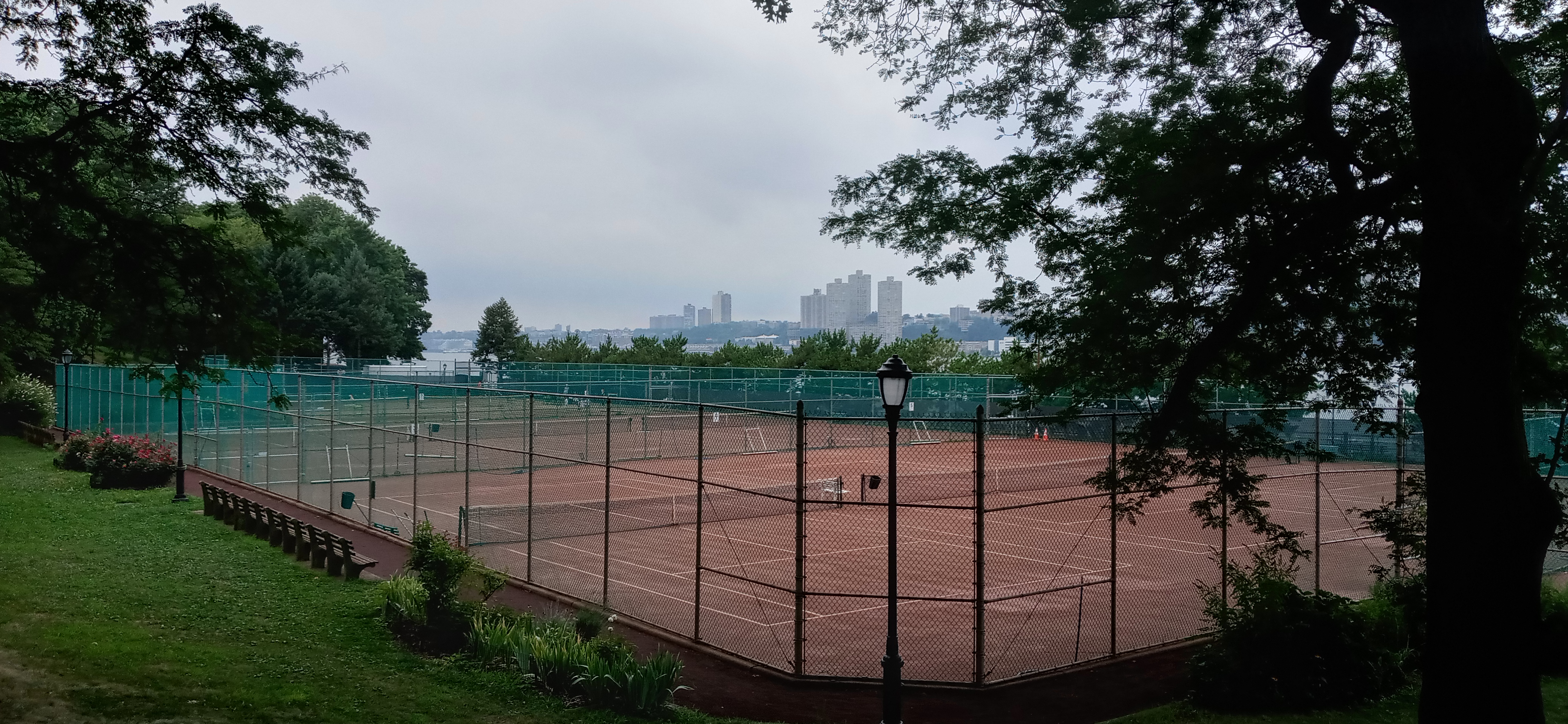
The city's second managed tennis location sits on Jaeger Drive at the Delray Swim & Tennis Club. It adds 24 clay courts to Delray's public tennis footprint, plus a full clubhouse. That number deserves a second look: many dedicated private tennis clubs in South Florida operate fewer courts than this single city-owned location. Combined with the 14 clay courts at the Tennis Center, the city's public clay court total reaches 38 across two sites - a scale that puts Delray in a different category from comparable-sized beach cities in the region.
The Swim & Tennis Club serves a different audience than the Tennis Center. Without the stadium and the ATP history overhead, it draws players who want straightforward court time in a lower-traffic environment. The clubhouse gives players a place to regroup between sets, and the swim component means families can move between the pool and the courts without leaving the property.
Residents who want consistent court access across the full year often use both facilities depending on what is open and available. Because both are city-run, the booking processes are similar and the same contact points generally apply. Neither site requires a private membership - both are open to Delray Beach residents and visitors.
Other Public Courts and Free Play Around Town
For casual players who do not need a pro shop, clay surfaces, or stadium adjacency, Pompey Park on NW 3rd Street offers free city-maintained public tennis courts. Delray Beach's Parks and Recreation department manages the facility; contact information is listed on the city's official website for questions about court availability and scheduling.
Free courts fill a real gap. A visitor who wants to hit for an hour before dinner, or a local who plays a handful of times per year, has no reason to pay court fees at the Tennis Center. Pompey Park handles that use case without friction. Lighting hours for evening play and current court conditions at smaller parks vary seasonally - the city's Parks and Recreation department is the right source for that information rather than any third-party guide.
The Delray Beach Open: ATP 250 in a Small City
The Delray Beach Open was founded in 1993. Todd Martin won the first singles title. The tournament operated at a separate venue for its early years before relocating to the Delray Beach Tennis Center in 1999, where it has been held every year since. In 2009 it was elevated to ATP 250 status - the professional tier it currently holds.
The numbers tell you what ATP 250 means in practice: more than 60,000 fans attend across the tournament each year, and television coverage reaches audiences in more than 50 countries. The 2026 edition - the 34th running of the event, held across ten days in mid-February - posted the largest prize purse in the tournament's history. Singles champion Sebastian Korda and doubles winners Austin Krajicek and Nikola Mektic took the titles.
The tournament is one of only eight ATP Tour events held in the United States each year - a short list by any measure. It also occupies a distinctive slot on the professional calendar: typically the first North American outdoor hard court event of the season, which gives it an early-season identity that players, coaches, and tennis media track closely as a form indicator before the Florida swing continues elsewhere.
For Delray Beach, the tournament's presence means the city has professional tennis infrastructure that cities many times its size lack - and that infrastructure is open to the public for the other eleven months of the year.

Champion Roll Call: The Names Who Won Here
The roll of past singles champions covers different generations of professional tennis and a range of playing styles. A partial list of notable winners:
- Todd Martin - first champion, 1993
- Kei Nishikori - won in 2008 at age 18, the youngest champion in tournament history
- Juan Martin del Potro - former world number 3 and US Open champion
- Frances Tiafoe - US Davis Cup regular and US Open semifinalist
- Cameron Norrie - 2022 champion
- Taylor Fritz - back-to-back titles in 2023 and 2024
- Sebastian Korda - 2026 champion
Nishikori's 2008 win is the record that stands out. He was 18, and the victory was an early signal that he was tracking toward the top tier of the game - which he reached. Fritz's back-to-back titles in 2023 and 2024 demonstrate a level of dominance that is genuinely hard to repeat at ATP level, where the draw changes and conditions vary year to year.
The Legends Event
Alongside the main ATP draw, the tournament runs an ATP Champions Tour Legends team event featuring former top-ranked professionals. For spectators who grew up watching tennis in the 1980s and 1990s, this is a serious pull. The format is more relaxed than the main draw but the competition is real, and the combination of current ATP players and former stars in a single ten-day event is something few stops on the calendar offer. Legends matches are included with grounds passes and typically run earlier in the day - and earlier in the tournament week - worth staying for if you are already at the facility.
Watching the Open: Tickets, Atmosphere, and Spectator Tips
The 8,200-seat stadium gives the Delray Beach Open an unusual quality for an ATP 250 event: genuine stadium atmosphere at a scale where nearly every seat has a strong sightline to the court. Larger tournaments at Masters-level events seat far more fans, but the distance from court to spectator grows accordingly. At Delray the proximity is part of what makes the experience work.
Ticket prices and categories change each year - check the tournament's official website for current options. General admission grounds passes allow movement between courts including practice courts where you can watch players warm up at close range. Premium courtside seats fill quickly for semifinals and finals. Practical tips for attending:
- Buy tickets early; weekend sessions and evening matches sell faster than weekday daytime sessions
- February daytime sessions at the open-air stadium can be warm - water and sun protection are practical necessities
- Parking near West Atlantic Avenue fills quickly on evening session days; arriving early or walking from off-site parking is easier than circling
- Legends matches run earlier in the tournament and earlier in the day and are included with grounds passes - they draw smaller crowds and offer close-up viewing
- Practice sessions before official match play are often accessible to grounds-pass holders at no additional cost
The Tennis Center's hosting history extends beyond the annual tournament. Davis Cup and Billie Jean King Cup international team ties have been contested at the facility, which means the infrastructure has been tested against high-stakes professional competition outside a single event window. That history adds to the venue's credibility and to the confidence players and organizers bring when they choose Delray each February.
Junior Programs, Adult Leagues, and Clinics for Residents
The tournament and the facility are the visible face of Delray Beach tennis, but the year-round programming beneath them is where the community actually connects with the sport. The Delray Beach Tennis Center runs junior programs for players across age and skill levels. The center has a Junior Program Director - contact information is available directly through the facility. Junior programming at a site with this infrastructure - clay courts, a working pro shop, a coaching staff that operates around ATP-level professional events - gives young players access to a serious development environment without the cost of a private academy.
Adult leagues and clinics run on a seasonal basis. Some are ladder-style leagues where players compete for ranking within the group; others are skill-based clinics with coached instruction. Residents who want structured play rather than casual open court time should contact the center directly about current offerings and registration windows, since programming changes from season to season.
For players who want organized competition, USTA league tennis is coordinated locally through the South Florida regional chapter. Both the Tennis Center and the Swim and Tennis Club provide court space for league play, which means Delray players can access competitive tennis without traveling to other cities. The combination of facilities, programming, and a professional tournament that runs through the same courts each February creates a tennis environment that rewards engagement at every level - from a junior learning to rally to a recreational adult playing league matches on the same clay where ATP professionals have competed.
Frequently Asked Questions
Is the Delray Beach Tennis Center open to the public without a membership?
Yes - the facility is owned and operated by the City of Delray Beach, making it a fully public venue. Court fees apply for reserved play, but no membership or club affiliation is required. Both residents and visitors can book courts and use the facility on the same terms.
When does the Delray Beach Open take place each year?
The full tournament runs approximately ten days in mid-February, combining the ATP 250 main draw with a Legends Champions Tour event and qualifying rounds. The 2026 edition ran from February 13 through 22, with the Legends event and qualifying beginning February 13-15 and the ATP 250 main draw running February 16-22. Exact dates shift slightly from year to year, so check the tournament's official website once the schedule is announced - usually several months in advance of the event.
What surface is the ATP tournament played on at the Tennis Center?
The Delray Beach Open is played on hard courts. The facility itself has a mix of surfaces - including a large number of clay courts - but the tournament draw is contested on hard courts, which is consistent with the event's identity as the first North American outdoor hard court stop of the ATP season.
Can I watch players practice during tournament week for free?
Practice sessions during tournament week are often accessible to grounds-pass holders at no additional charge, and some open practice periods may be free to attend. Specific policies vary by year, so confirm at the gate or on the tournament's official site before you arrive.
Are there free public tennis courts in Delray Beach besides the Tennis Center?
Yes. Pompey Park on NW 3rd Street has free city-maintained courts managed by Parks and Recreation. For players who want casual hitting without court fees, this is the practical option. The city's official website lists contact information and current court availability for park facilities.
How many clay courts does Delray Beach have in its public network?
Across the two city-managed sites - the Delray Beach Tennis Center on West Atlantic Avenue and the Delray Swim and Tennis Club on Jaeger Drive - the total reaches 38 clay courts. The Tennis Center holds 14 of those; the Swim and Tennis Club holds 24. Both are publicly accessible without a private club membership.